Planning ahead
Making end-of-life choices clearer, calmer and more informed.
At Solace, we can help with any kind of planning you would like to do. If you need a funeral plan, we can help. Stuck for how to put together an Advance Care Plan? We can help with that as well. It can be hard to get your head around all the end-of-life documents and how they fit together.
Depending on your circumstances, you could consider:
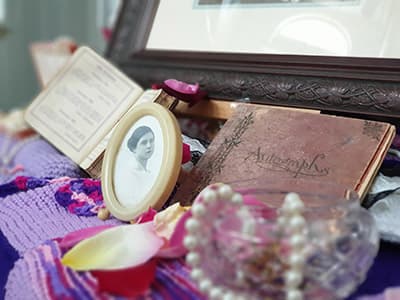
Wishes
Write down what matters to you.
One of the best things you can do when considering funeral planning is to think about all the possibilities and write down your wishes.
The Australian Home Funeral Alliance and the Natural Death Advocacy Network have some really useful fact sheets and tips on the various types of planning you could do.
A good place to start is by completing a Wishes Booklet which will document all the wishes around the kind of funeral you might like, the ways you want to be treated but also record all the things your executor might need to know to address your estate.
The Australian Home Funeral Alliance have provided a list of questions to ask your funeral Director.
Funeral planning
Knowing your options gives you more choice.
The Natural Death Advocacy Network is committed to providing communities with information which will help in the making of informed choices regarding your funeral options. From coffins, transport, celebrancy and interment, NDAN endeavours to outline the options for traditional and contemporary funeral choices.
The Natural Death Advocacy Network has a checklist of things that can be considered when planning a funeral. Here is the checklist of possible components and considerations for a funeral ceremony. This list is compiled based on the choices given when engaging with contemporary funeral businesses.
Family-led funeral decisions
For a Family-Led Funeral, there are some mandatory decisions or components in the process. They are as follows:
Conventional burial, natural burial, water cremation or flame cremation
Registration of death
Permit for burial or cremation
Coffin or shroud selection
Coffins can be traditional hardwood, particle board, or woven, including home-made. No coffin is required if the body is shrouded, however you will need to consider a hard flat base for transport, burial or cremation.
Transportation of coffin or shrouded body
A coffin will not fit into most cars but vans, utes with canopies or a hearse are suitable.
Pallbearers and manual handling
Pallbearers, not just for carrying or lifting, but you also need to consider the manual handling in whatever spaces you are in. A body is heavy, and to safely transport one in a coffin/shroud will require multiple people. To lower a coffin into a grave will require a MINIMUM of 4 people and 1 to direct.
A note on ceremony
Funerals can be expensive and funeral poverty is a very real problem in Australia.
The funeral/memorial ceremony is the only thing we have in Australian culture to weave our grief and bereavement around. By pricing people out of a ceremony they are removed from all the things that a good ceremony can provide; a network of shared grief, peer support and the act of service, namely, showing up and honoring your person.
However, in many cases, you will never need a funeral director for any of this. Often, people choose to have a cremation only when someone dies and then plan a memorial gathering themselves at a convenient time.
This can be a good way to keep the costs down and still gather community to offer support, grieve and mourn together.
Other ceremony choices to consider
There are many choices that families and communities can make to ease the financial burden of funerals and still honor a person's life with authenticity and dignity.
Your choices
Planning on your own terms.
Knowing what choices are available to you and having the time to consider what feels right, gives you the opportunity to go into that planning from an informed position and it enables you to deal with professionals on your own terms.
You may still want to use a funeral director but you get to pick and choose the tasks you want them to undertake.
NDAN's funeral planning factsheet is designed to give you an idea of what options may be available to you and, given that knowledge, inform the discussions you have with your family, friends, and end of life and death care providers.
Importantly, this is a process you have the right to take part in or govern as much or as little as you choose. AHFA also provides helpful information about family-led and home funeral requirements.
Advance care planning
Planning for the care you want.
The organisation Advance Care Planning Australia is a place where you can access the forms to complete an ACP relevant in your State or Territory. Information specific to Tasmania can be found here.
It can take a lot of intentional thought and consideration to make a robust document that addresses all the things that are important to you. Section 1 is about all the values you hold, both personal and medical, and set the framework for the people who will care for and interact with you. Section 2 can be a good one to talk to your medical people about. This section records all the interventions, medications and treatments you may want to refuse, and the circumstances under which you would refuse them.
The Natural Death Advocacy Network has some more information as well which you can find here.
Want to do it yourself?
If you want to do it yourself, we are always happy to pass on our contacts for the people we use when planning funerals. So if you'd like options for things like florists, recording and live streaming, celebrants, stone masons, grave diggers, and caterers, please reach out and ask!